


On May 9, a team led by Jianwei Pan, Qiang Zhang, and Feihu Xu from the Hefei Laboratory, in collaboration with institutions including the Massachusetts Institute of Technology (MIT) and the Xi'an Institute of Optics and Precision Mechanics of the Chinese Academy of Sciences (CAS), for the first time proposed and experimentally demonstrated an optical synthetic aperture technique based on active optical intensity interferometry. This breakthrough enabled high-resolution imaging of a millimeter-scale target from a distance of 1.36 kilometers. The imaging resolution of the experimental system was enhanced approximately 14-fold compared to that of a single telescope within the interferometer. This work was published in Physical Review Letters under the title "Active Optical Intensity Interferometry," selected as an Editors' Suggestion and featured on Physics, a website of the American Physical Society (APS).
The resolution of conventional imaging techniques is constrained by the diffraction limit of a single aperture. To overcome this physical limitation, researchers have long been dedicated to developing various synthetic aperture imaging technologies. A prominent example is the Event Horizon Telescope (EHT), which formed an Earth-sized synthetic aperture to successfully capture the first image of the black hole at the center of the M87 galaxy in the radio-frequency domain in 2019, a landmark achievement that received the 2020 Breakthrough Prize in Fundamental Physics. However, due to phase instability induced by atmospheric turbulence, the amplitude interferometry-based synthetic aperture technique employed by EHT is difficult to apply directly in the optical domain.
As early as the 1950s, British scientists Hanbury Brown and Twiss (HBT) proposed intensity interferometry and successfully measured the diameter of Sirius in 1956. Compared to amplitude interferometry, intensity interferometry, which relies on the second-order coherence of thermal light, is insensitive to atmospheric turbulence and optical imperfections in telescopes, offering unique advantages for long-baseline optical synthetic aperture imaging. Nevertheless, current applications of intensity interferometry have been limited to passive imaging of sources like stars. To achieve high-resolution imaging of non- self-luminous, distant targets while mitigating atmospheric turbulence, intensity interferometry combined with active illumination has emerged as an excellent candidate. Yet, its application in active synthetic aperture imaging has remained challenging due to the lack of effective schemes for long-range pseudo-thermal illumination and the absence of robust image reconstruction algorithms.
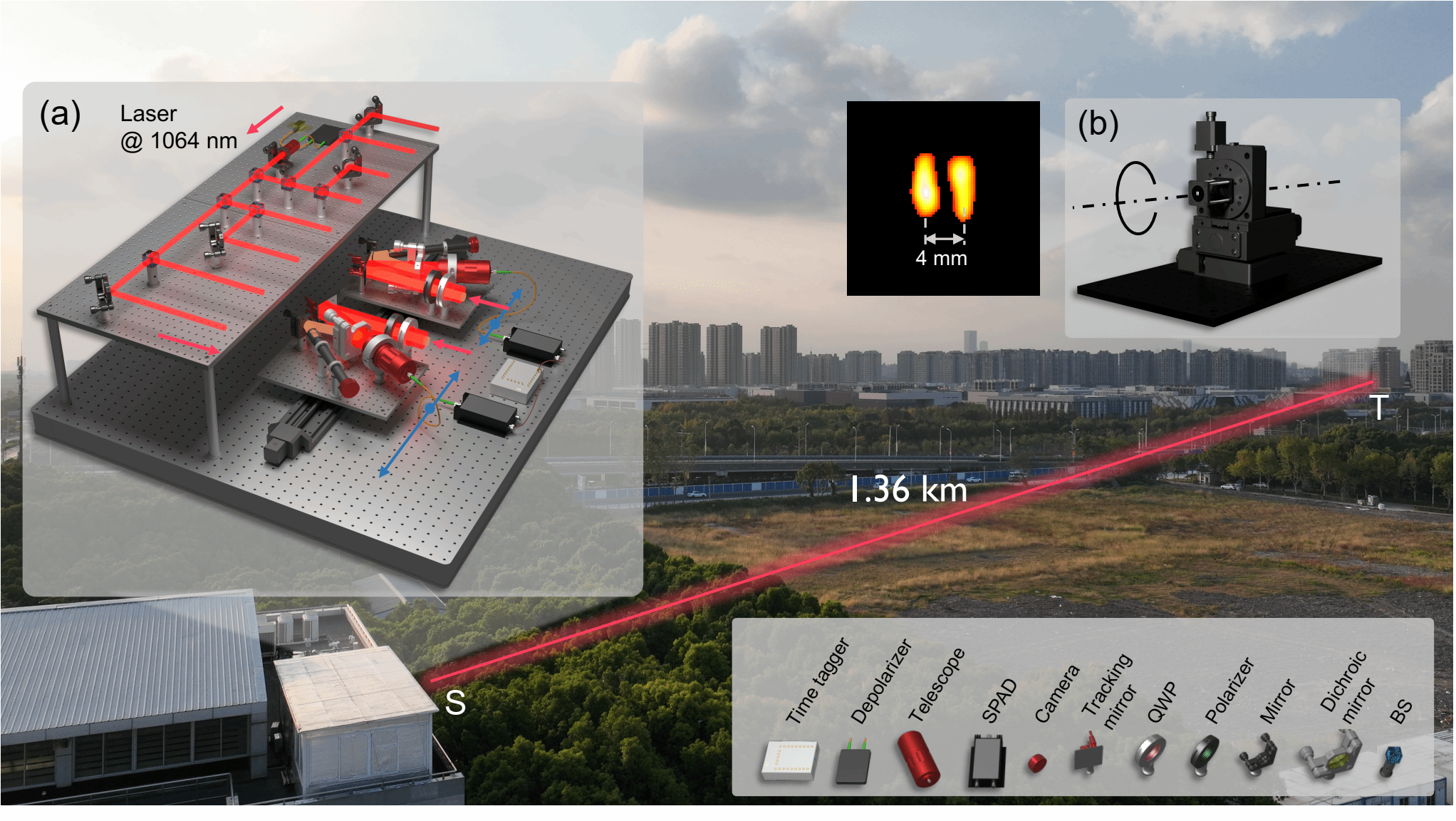
Fig. 1. Schematic of the experimental setup
To address these challenges, the research team proposed an active optical intensity interferometry technique. They developed a multi-laser transmitter array system that ingeniously synthesizes multiple, phase-independent laser beams to achieve long-range pseudo-thermal illumination by leveraging the natural modulation from atmospheric turbulence. As depicted in the schematic, in a 1.36 km open-air urban experiment, the team used an array of eight mutually independent laser transmitters to illuminate the target. The 0.15-meter spacing between adjacent transmitters was greater than the typical outer scale of atmospheric turbulence (0.02-0.05 m), ensuring that each laser beam acquired an independent and random phase variation after propagating through the atmosphere. Concurrently, the receiver system, comprising two movable telescopes, formed an interferometric baseline ranging from 0.07 to 0.87 meters. This setup was coupled with high-sensitivity single-photon detectors to measure the intensity correlation of the light field reflected from the target. The team also developed a robust image recovery algorithm, ultimately succeeding in reconstructing the target image with millimeter-level resolution.
This work opens up new possibilities for applications such as long-range, high-precision remote sensing and the increasingly important detection of space debris. A reviewer for Physical Review Letters highly praised the achievement, stating, "the paper makes a significant advance in the issue of high-resolution imaging through the atmosphere at extended distances."
This research received significant support from the National Natural Science Foundation of China (NSFC), the Chinese Academy of Sciences (CAS), the Ministry of Science and Technology, and the Shanghai and Anhui provincial governments. Ph.D. student Luchuan Liu and postdoctoral fellows Cheng Wu and Wei Li are the co-first authors.